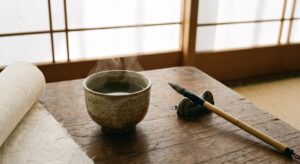
The first sound is not what you expect
Many travelers arrive in Japan with a familiar soundtrack in mind: temple bells, festival drums, perhaps the delicate strings of a koto.
Then they hear the Satsuma Biwa.
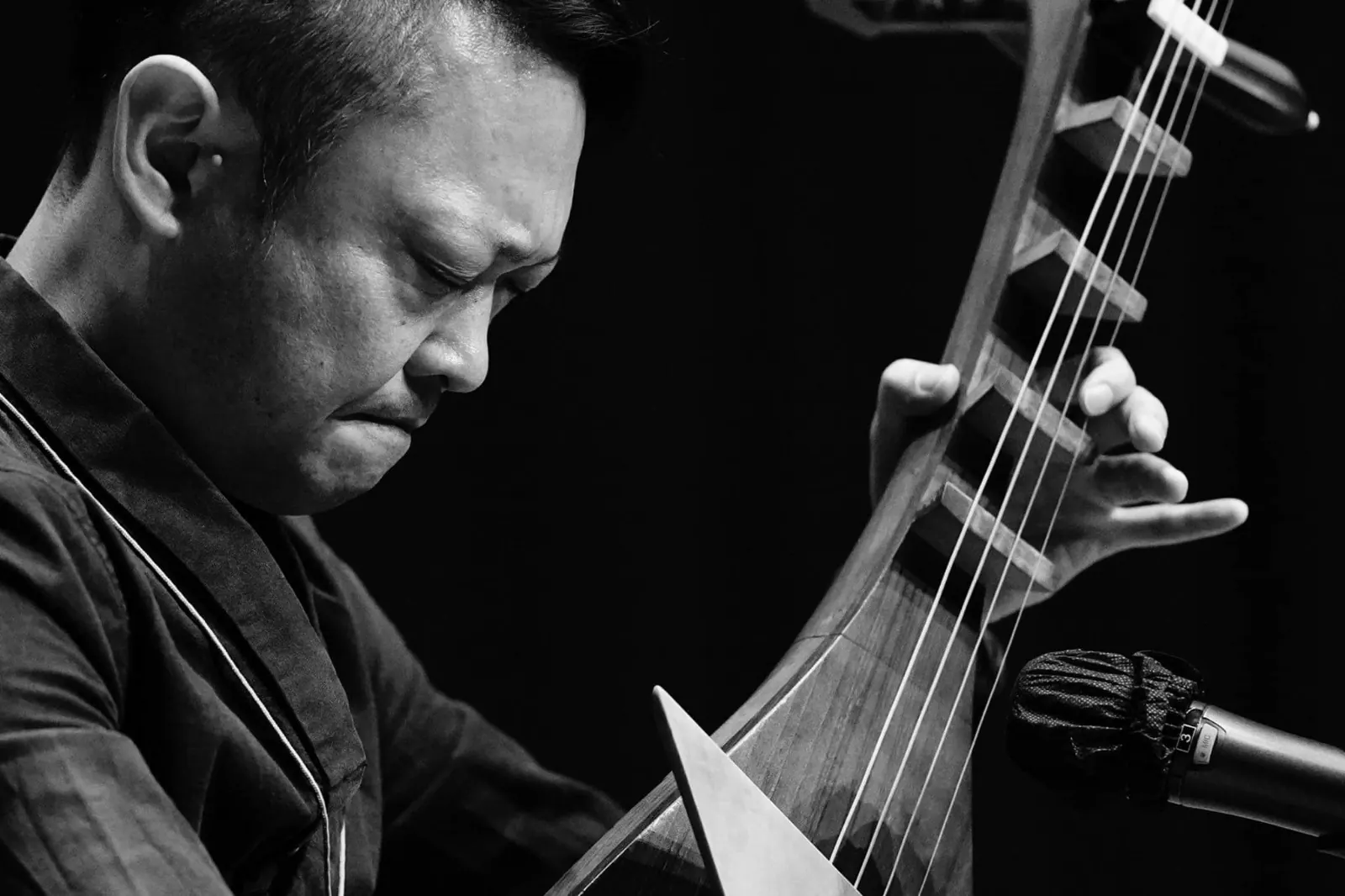
The sound is deeper, rougher, and more dramatic. A large wooden plectrum strikes the strings and body of the instrument, creating a voice that feels closer to storytelling than background music. It does not simply decorate a room. It changes the atmosphere of it.
That is why the Satsuma Biwa has such a strong connection with stories of battle, honor, and human resolve. The instrument does not ask you to listen passively. It asks you to pay attention.
An instrument you feel before you understand
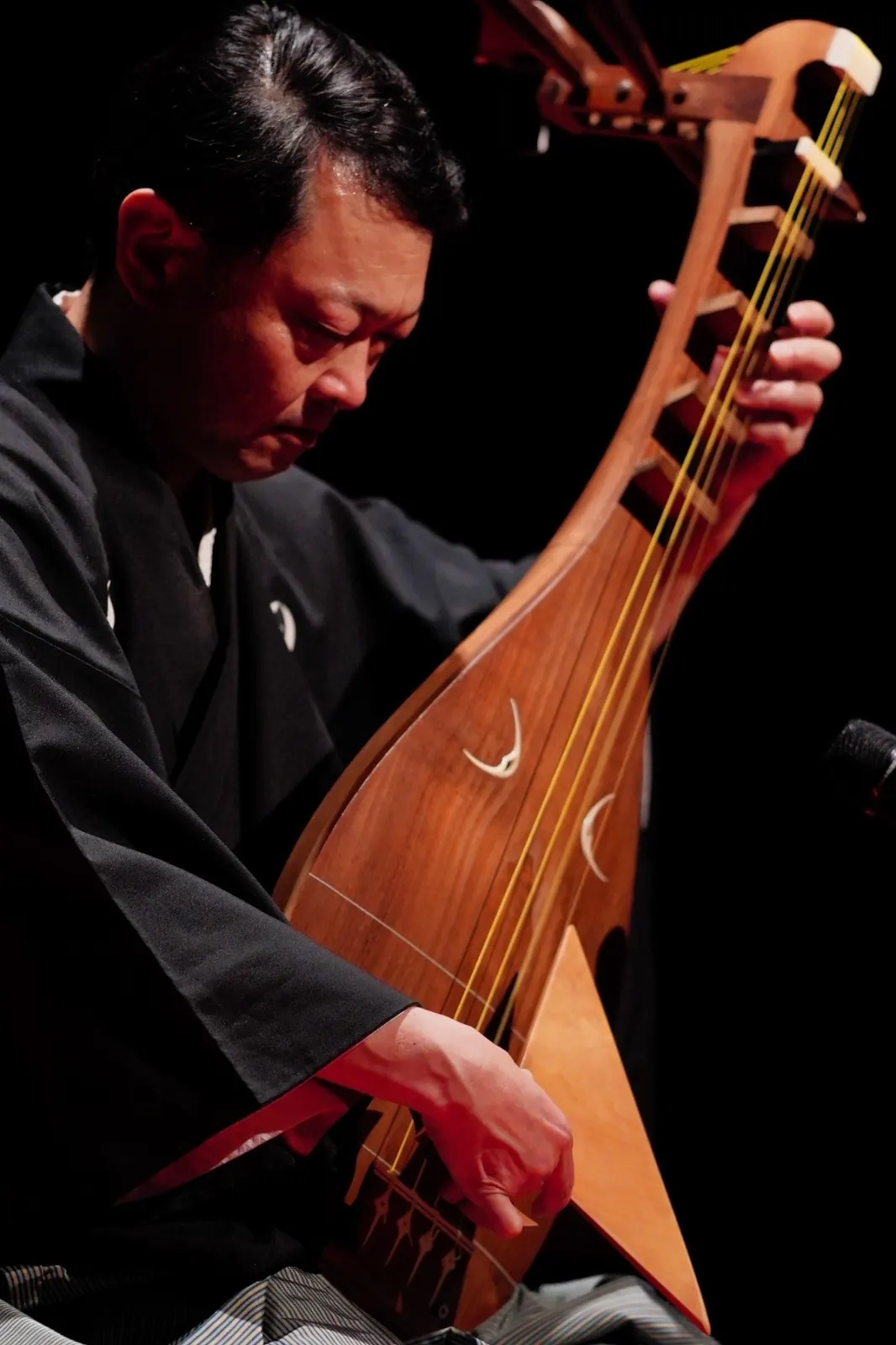
The Satsuma Biwa is a traditional Japanese string instrument once favored by samurai. Its body has real physical presence, and the large wooden plectrum—called a biwa bachi—produces a forceful sound that can surprise first-time listeners.
But sound is only part of the experience.
Before playing, you learn how to approach the instrument: how to sit, how to hold it, and how to move with care. Posture and etiquette are not decorative rules added to the lesson. They shape the encounter from the beginning.
This is a very different idea from trying an instrument for a quick photo. You become aware of your hands, your breathing, and the way your body occupies the space. Even before you create a clear note, you have already started learning.
Why the voice matters
Biwa traditions bring sound and narrative together. The strings do not exist separately from the human voice; they support stories, tension, silence, and emotion.
During the Crazy Escape experience, participants may play while vocalizing. You do not need to be a trained singer or musician. The purpose is not technical perfection. It is to understand how voice, instrument, and physical presence work together.
For many visitors, this becomes the most memorable part. The moment feels unfamiliar, but it is also direct: your hand creates the sound, your voice enters the room, and the instrument answers.
There is nowhere to hide behind a screen or a performance by someone else. You are part of what happens.
From spectator to participant
Traditional arts are often presented to travelers from a safe distance. You watch a demonstration, take a photograph, and move on.
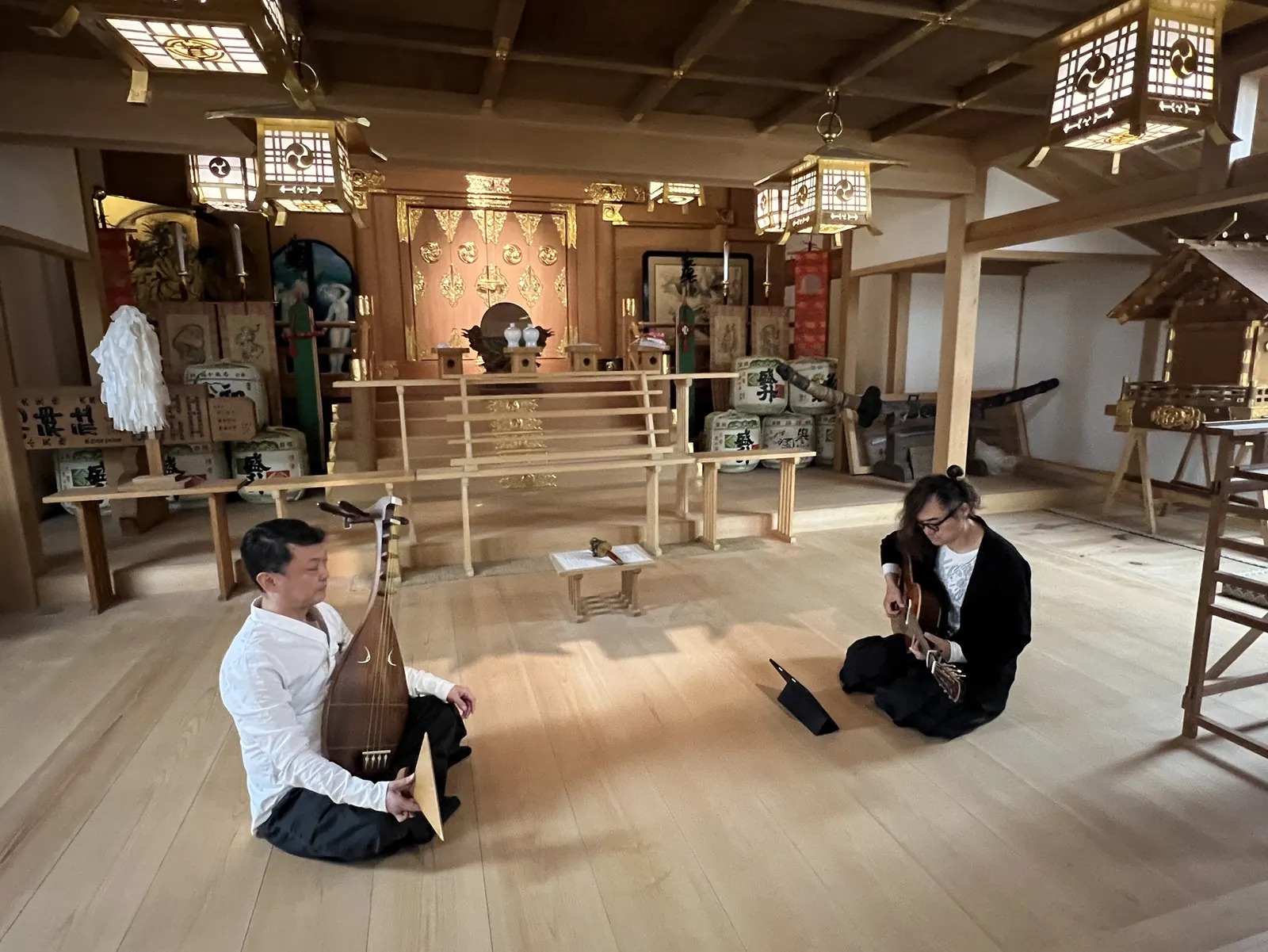
The SAMURAI SOUND – Satsuma Biwa Experience is built differently. A professional Satsuma Biwa artist guides you through the instrument’s cultural background, the manners associated with handling it, and the basic physical movements needed to create sound.
You then hold the instrument yourself.
Over approximately 70 minutes, the session moves from introduction and etiquette to hands-on playing and vocalization. The experience concludes with a short solo performance recording, which is sent to participants afterward.
The recording is a meaningful souvenir because it captures more than appearance. It records the moment you attempted something that most visitors to Japan never encounter.
A quieter journey beyond central Tokyo
The experience takes place in Yamato City, Kanagawa Prefecture, accessible from Sagami-Otsuka Station on the Sotetsu Line.
Leaving central Tokyo is part of the appeal. The short walk through a quiet neighborhood creates a transition between the speed of sightseeing and the concentration the instrument requires.
There are no crowds competing for the same photograph. The group is small, with space for personal guidance and questions. Instead of collecting another landmark, you spend time with an artist and an instrument that carries a distinctive cultural memory.
Who will enjoy this experience?
This experience is especially suited to travelers who:
- Want a hands-on encounter with a Japanese traditional art
- Are interested in samurai culture beyond costumes and staged sword fights
- Enjoy music, storytelling, craftsmanship, or performance
- Prefer small-group experiences away from crowded tourist districts
- Want a personal souvenir with a story behind it
No previous musical experience is required. Curiosity, patience, and respect for the instrument are far more important than talent.
Practical details
- Location: Yamato City, Kanagawa Prefecture
- Nearest station: Sagami-Otsuka Station, Sotetsu Line
- Duration: Approximately 70 minutes
- Group size: 1–10 participants
- Language: Japanese and English support
- Included: Instructor, instrument rental and venue fee
Because the sessions are led by a professional artist and use a limited number of instruments, advance inquiries are recommended.
Hear samurai Japan with your own hands
The Satsuma Biwa is difficult to understand through a photograph. Its meaning is in the relationship between weight, posture, voice, silence, and sound.
You do not have to master it. You only have to meet it properly.
For travelers looking for a side of Japan that cannot be experienced through observation alone, this is an encounter worth making.