
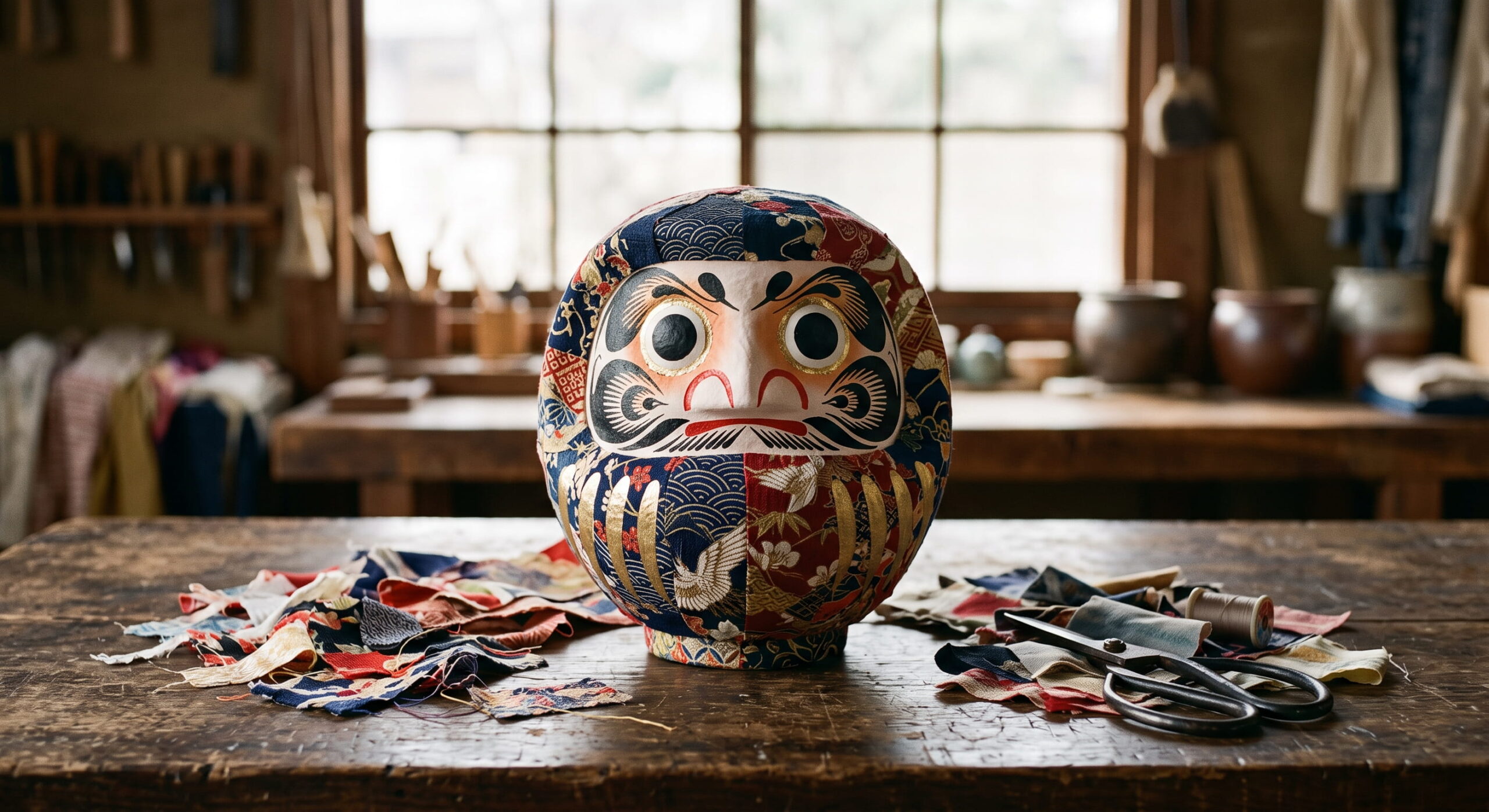
Every souvenir shop in Japan sells daruma. The red ones, the gold ones, the miniature ones vacuum-packed in plastic near the airport departure gate. You buy one, you carry it home, you place it somewhere — a shelf, a desk corner, the top of a bookcase — and then, over time, it becomes part of the furniture. Not meaningless, exactly, but not quite charged with meaning either. An object that once represented something and now represents the trip.
This is not the daruma’s fault. It is the fault of the transaction.
The daruma doll is, in its original cultural context, one of the most psychologically precise objects in Japanese tradition. Modeled on Bodhidharma — the sixth-century monk who is said to have meditated for nine years until his limbs withered — it is designed as a vessel for a specific, personal intention. You write your wish on the body before you do anything else. Then you paint one eye, leaving the other blank until the wish is fulfilled. The doll’s weighted base causes it to right itself when knocked over — seven times down, eight times up — which is the point. The object is not a decoration. It is an ongoing, physical reminder of what you decided to pursue.
Most souvenir daruma arrive with both eyes already painted. The decision has been made for you. The wish has been omitted. What you are holding is the shape of the thing, without the thing itself.
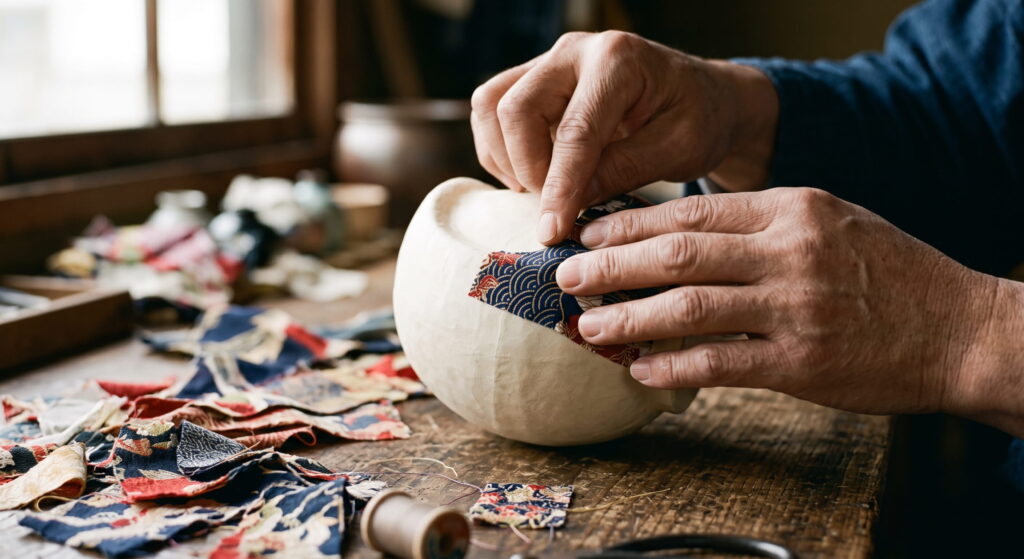
At Daruchan no Ouchi, a small workshop beside Jindaiji Temple in Chofu — a quiet part of western Tokyo that most tourists never reach, and where one of Japan’s most famous daruma markets takes place each March — the process begins differently. You write your wish first. On the body of the daruma, in your own hand, before a single piece of fabric has been chosen. The intention precedes the craft. This is not a procedural detail. It is the entire logic of the experience.
Then comes the fabric. Not paint, not stickers — authentic Japanese kimono cloth, lightweight yukata cotton, and rare kakishibu-dyed material, each with its own texture, history, and visual weight. You select. You cut. You apply the pieces with a traditional paste, working with your fingers, covering the daruma’s body in a pattern that is entirely yours. No two are alike, because no two people choose the same fabrics in the same arrangement. The object that emerges is a record of your taste, your patience, and — underneath all of it, written before you began — your intention.
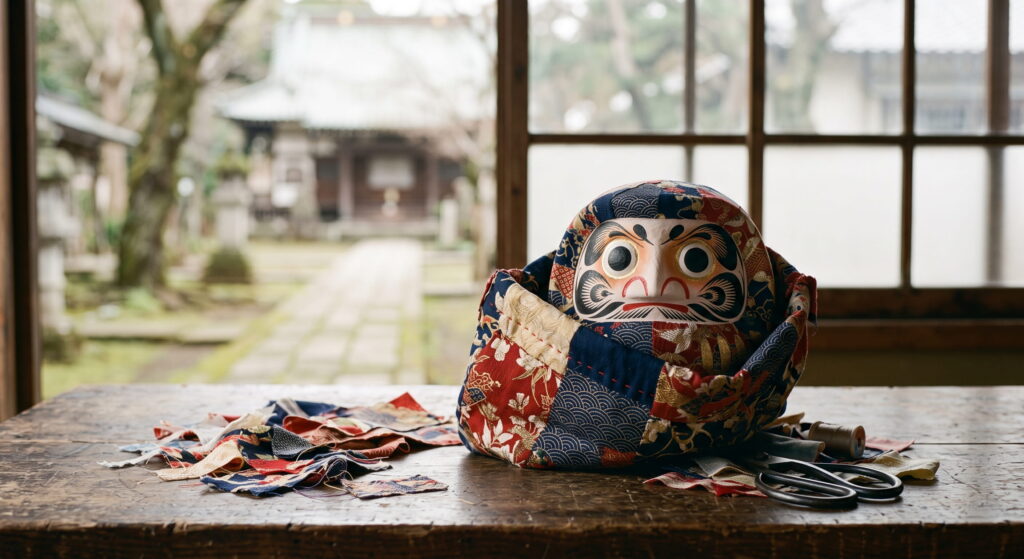
The workshop runs ninety minutes, privately, for groups of one to four people. The setting is Jindaiji — temple grounds, cedar trees, the particular quiet of a neighborhood that operates at its own pace. After the session, there is a fabric pouch for the journey home and a small daruma-themed souvenir. There is also a daruma headpiece available for photographs outside, which is exactly as joyful as it sounds.
The difference between this daruma and the one from the airport shop is not aesthetic. It is the difference between an object you acquired and an object you made — and, more precisely, one that carries a wish you wrote down before you knew how it would turn out. That specificity is what makes it something you will not put on the top of a bookcase and forget. It is something you made with your hands, on a specific afternoon, in a temple town, for a reason you chose yourself.
That is what souvenirs are supposed to be. Most of them just forgot how.
Craft Your Own Lucky Daruma, 80 USD / 90 minutes, Jindaiji Temple, Chofu Tokyo