
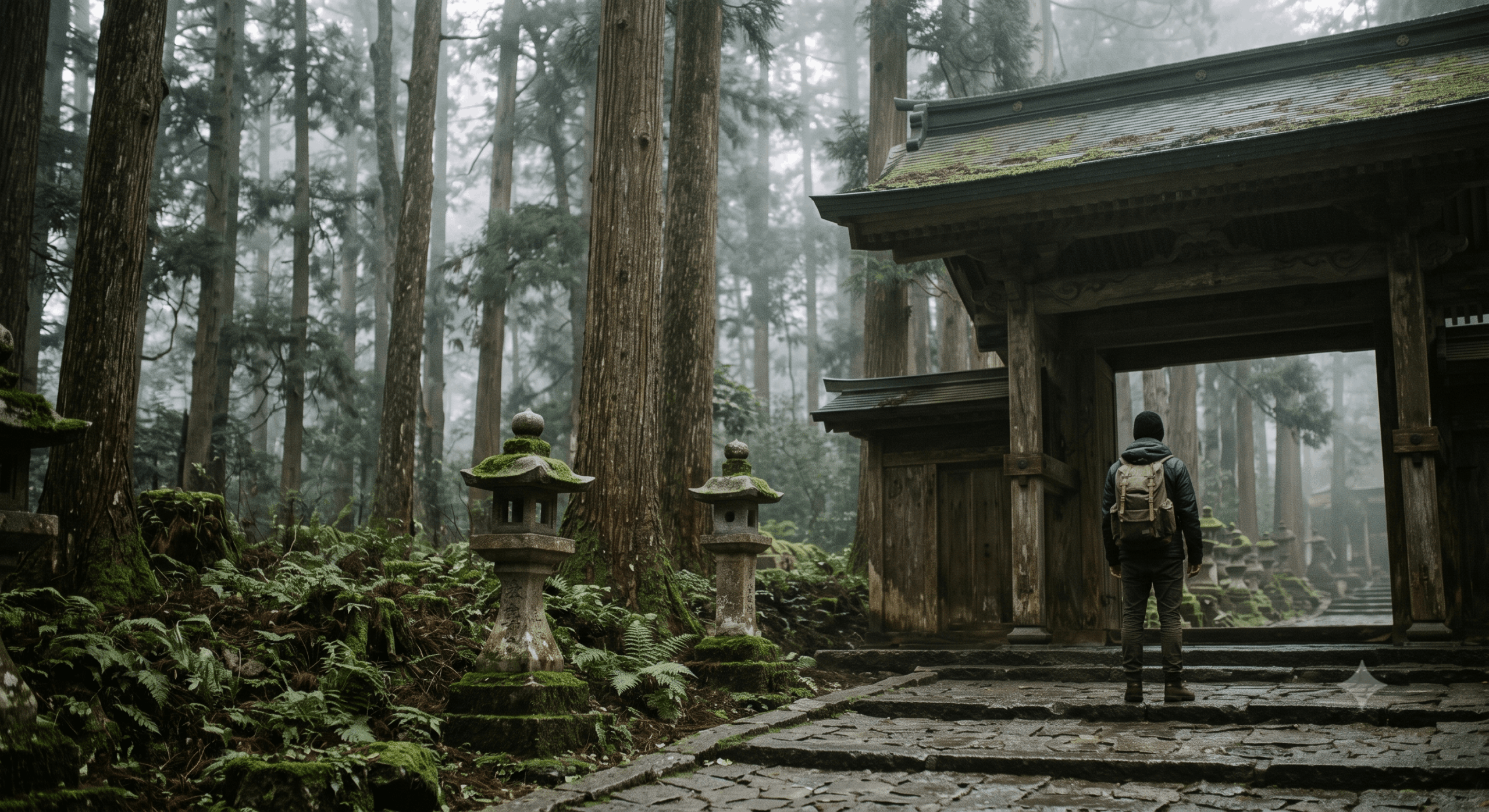
The entry fee to most of Japan’s great temples is negligible, or nothing at all. This is not an oversight. The architecture, the gardens, the centuries of accumulated stillness are considered, in the oldest formulation of Japanese cultural logic, to belong to no one in particular and therefore to everyone. You pay nothing to stand before them. What you bring to the encounter, however, is entirely your own problem.
This distinction has become newly urgent in the era of the itinerary optimized for volume. The standard five-day Tokyo-Kyoto circuit now contains more UNESCO-designated sites per day than most travelers can meaningfully absorb in a week. The temples are visited. The photographs are taken. The experience, in the sense of something that changes the interior weather of a person, largely does not occur. The gate is photographed. The gate is not seen.
Kinkaku-ji receives approximately five million visitors per year. On a typical afternoon in high season, the famous Golden Pavilion is visible behind a continuous foreground of raised phones, the image of it already composed and captioned before the eye has had time to actually rest on the gold. The temple is free. The thirty seconds it would take to stop photographing and simply look, to let the proportions of the structure settle, to notice the particular quality of the reflection in the Kyoko-chi pond, to hear the raked gravel rather than the crowd, costs something that no entry fee covers. It costs attention. And attention, in 2026, is the scarcest currency most travelers carry.
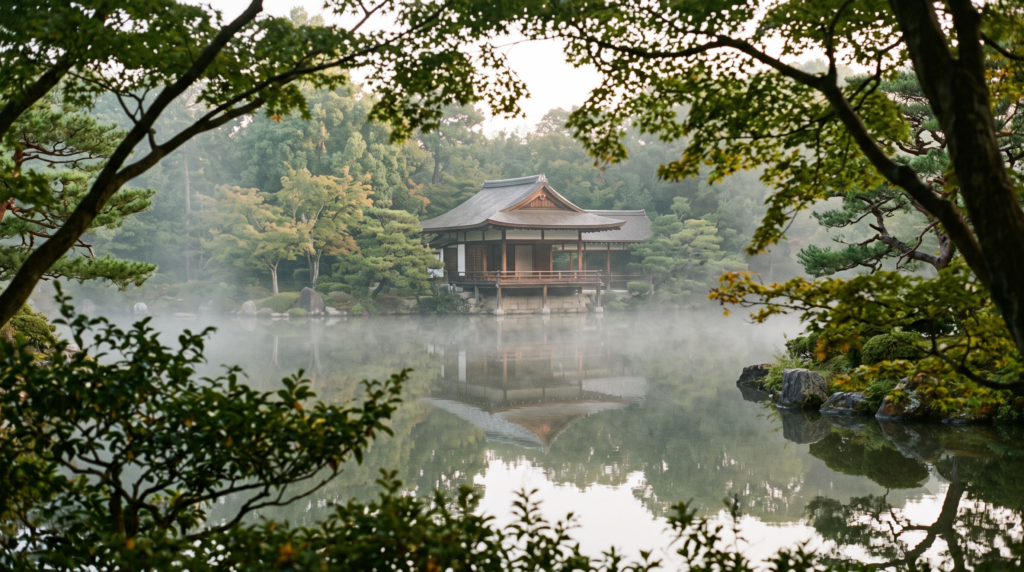
The temples themselves are indifferent to this. They have absorbed invasions, fires, the wholesale restructuring of Japanese society across a dozen political epochs, and now tourism at a scale their designers could not have imagined. The cedar at Kasuga Taisha in Nara is older than the concept of a tourist. The moss at Saihō-ji, Kyoto’s Moss Temple, for which a reservation must be made weeks in advance, a letter of intention written, the visit itself conducted in meditative silence, has been accumulating since the Muromachi period. Neither the cedar nor the moss is waiting for your engagement to validate its significance. The significance predates you by several centuries and will outlast your visit by several more.
What this means, practically, is that the experience of a Japanese temple is almost entirely self-determined. Two people can stand at the same gate at the same moment: one will have visited a temple, and one will have been to a temple. The difference is not spiritual aptitude or cultural knowledge. It is simply the willingness to slow down below the pace that a packed itinerary demands, to stop treating the site as a location to be confirmed and start treating it as a place to be inhabited, briefly, on its own terms.
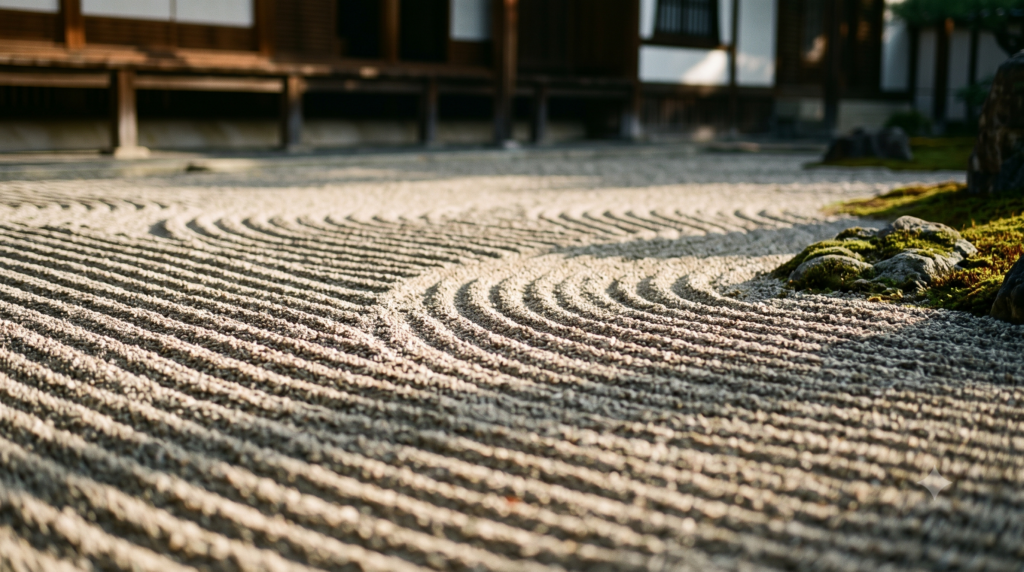
The travelers who report the most transformative encounters with Japan’s sacred architecture are not, as a rule, the most knowledgeable. They are the ones who arrived early, before the tour buses, and sat down somewhere without immediately reaching for a phone. Who let twenty minutes pass without producing anything. Who noticed, eventually, the sound the gravel makes under a specific quality of morning light, and understood without being told that this sound is the point. Not the building, not the garden, not the Instagram location pin, but the accumulated silence of a place that has been tended, daily, by people who understood that tending is itself a form of meaning.
The temple was free. That part was never the cost.
Attention is the rarest thing you can bring to a temple. The same is true of a tea bowl and a brush. If you want to practice both in the same afternoon, start here. Shodo Meets Tea Ritual Experience, 130 USD / 1.5 hours