
You step off the plane. You’re jet-lagged, disoriented, and slightly overwhelmed by the sheer scale of Tokyo.
And then you walk into a convenience store.
Something shifts.
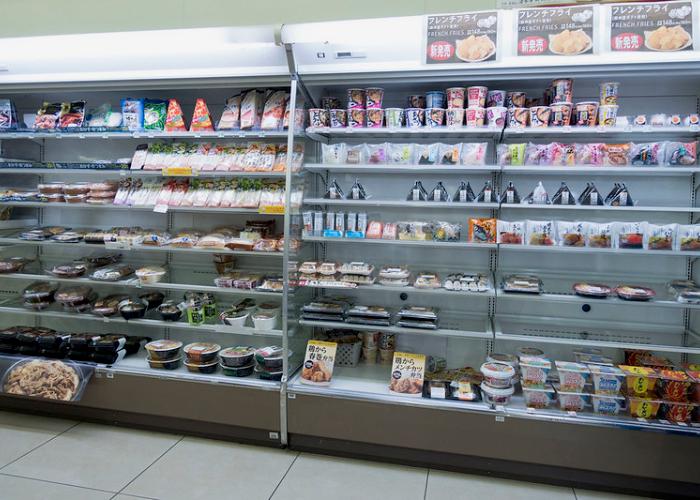
The lighting is warm and precise. The shelves are stocked with a kind of quiet abundance — onigiri wrapped in origami-like precision, sandwiches with their fillings perfectly centred, hot foods rotating slowly under a glass case as if they’ve been waiting specifically for you. A staff member greets you before you’ve even cleared the entrance. There isn’t a single item out of place.
You came in for a bottle of water. You stay for ten minutes, moving slowly, reading labels you can’t understand but somehow trust completely.
This is your first lesson in Japanese philosophy — and it didn’t happen at a temple.
1. The Word “Convenience” Doesn’t Do It Justice
In most countries, a convenience store is exactly that: convenient. A last resort. A place you go when the real options are closed. You buy gum, maybe a sad sandwich, and leave feeling vaguely like you could have done better.
Japan looked at that concept and quietly, methodically rebuilt it from the ground up.
The Japanese word for it is konbini (コンビニ) — a shortened version of “convenience store” that has, over decades, come to mean something far larger than its origin. Today, there are over 55,000 konbini locations across Japan. That’s more than one for every 2,300 people. In Tokyo, you are rarely more than a few minutes’ walk from one.
But the density isn’t the point. The quality is the point.
2. Everything Is Designed to Be Exactly Right
Walk into a 7-Eleven in most parts of the world and walk into a 7-Eleven in Japan. They share a name. They share almost nothing else.
In Japan, konbini food is developed with the same seriousness that most countries reserve for restaurants. New seasonal products launch with the changing of the weather. The onigiri fillings are rotated to reflect what’s good that month. The sandwiches — egg salad on milk bread, crustless and cloud-soft — have been refined through thousands of iterations to reach a state of quiet perfection.
Nothing on those shelves is there by accident.
This is kaizen thinking — the Japanese concept of continuous improvement — applied to a tuna mayo rice ball. And when you hold that onigiri in your hands and take a careful, considered first bite, you can taste the philosophy behind it.
3. It Serves Every Dimension of Your Life
This is where konbini moves beyond food entirely.
Need to pay a bill? Konbini. Print a document? Konbini. Send a parcel? Konbini. Buy concert tickets, top up your transit card, pick up dry cleaning, get a passport photo, access an ATM that works with foreign cards, buy fresh flowers, find a hot bowl of oden at 3am? Konbini. All of it. All the time.
In Japan, the logic is simple: if something needs to exist, it should exist well, and it should be accessible. The konbini is the physical embodiment of that belief. It doesn’t ask you to plan ahead. It meets you exactly where you are — at any hour, in any neighbourhood, in any state of need.
For a culture that values harmony and the smooth functioning of daily life, the konbini isn’t a shortcut. It’s infrastructure.
4. The Staff Are Part of the Design
There’s a moment every regular konbini visitor knows.
You approach the counter. The staff member’s greeting — irasshaimase — comes before you’ve made eye contact, before you’ve set your items down. The transaction is swift, precise, and completely unhurried at the same time. Your hot items are placed in a separate bag from your cold ones. A paper bag is offered, folded just so. Change is returned with two hands and a small bow.
You are out the door in under ninety seconds feeling, inexplicably, looked after.
That experience — efficient and warm at the same time — is not an accident of personality. It is the result of training, of systems, of a deep cultural belief that even a small transaction between two strangers is worth doing with full attention and care.
5. What Konbini Can Teach You About Japan
If you want to understand a country, pay attention to what it takes seriously.
Japan takes the convenience store seriously. Not because it needs to — nobody required 7-Eleven to perfect its egg salad — but because in Japanese culture, if something is worth doing, it is worth doing properly. The concept doesn’t come with exceptions for small things or everyday things. It applies to everything.
That principle — the refusal to treat anything as beneath care — is what you feel in a well-run izakaya, in a meticulously wrapped department store purchase, in a shinkansen that arrives to the second.
And yes. In a rice ball from Lawson at 7am, eaten on a quiet platform while Tokyo wakes up around you.
6. Your Konbini Order, Like a Local
If you’re new to konbini life, here’s where to start:
Must-try foods: Onigiri (tuna mayo or salmon, always), tamagosando (egg salad sandwich on milk bread), nikuman (steamed meat bun, hot from the case), pudding (richer than it has any right to be)
Drinks: Canned Boss Coffee (black, from the warm section), Pocari Sweat after a long day of walking, seasonal Frappé drinks that change every few weeks
Hidden gems: Hot oden in autumn and winter, fresh bento changed three times a day, premium ice cream from the freezer that competes with any dessert shop
Pro tip: Don’t rush. Walk the entire store once before you decide. The discovery is part of the experience.
Japan has a way of making the ordinary feel like something worth paying attention to. The konbini is one of the best places to feel that for the first time — or the hundredth.
If you’re ready to go deeper into Japanese culture beyond the guidebook highlights, explore our immersive experiences in Tokyo — designed for travelers who want more than sightseeing.