
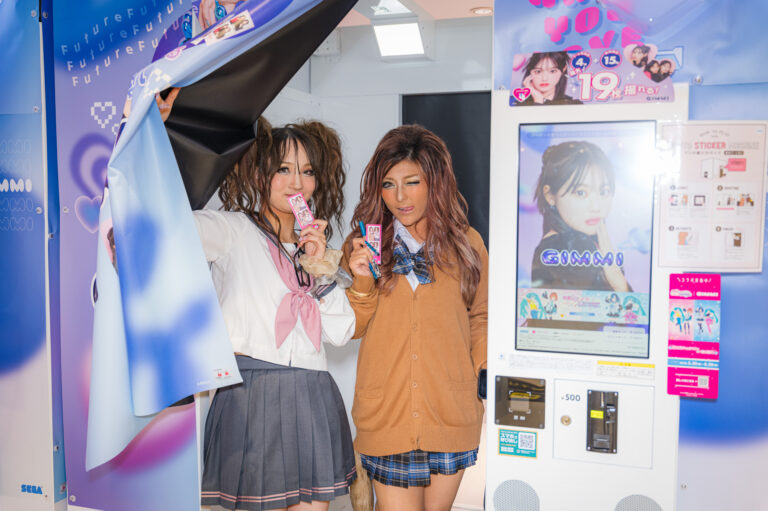
There is a photograph from Shibuya in the late 1990s that tells you everything.
A young woman stands at the scramble crossing. Her skin is bronzed dark. Her hair is bleached and stacked high. Her lashes reach somewhere beyond practical. She isn’t performing. She isn’t posing for tourists. She is simply walking to wherever she’s going — and she is completely, unapologetically herself.
That image didn’t happen by accident.
1. Before Gyaru, There Was a Mold
To understand what gyaru was, you first have to understand what Japan expected.
For decades, the ideal Japanese woman was quiet. Modest. Pale-skinned — because pale skin historically signaled that you didn’t work outdoors, that you were refined, that you stayed in your place. The beauty standard wasn’t just aesthetic. It was a social contract.
Gyaru tore it up.
In the 1990s, a generation of young women in Tokyo — mostly in their teens and early twenties — decided, collectively and loudly, that they were done. Done with the mold. Done with the script. Done with disappearing into a uniform version of femininity that never asked what they wanted to look like.
So they went the other direction. Entirely.
2. The Aesthetic Was the Argument
Dark skin. White eyeliner pulled wide. Rhinestones. Platform boots that added six inches. Miniskirts in December. Bright, electric, overwhelming color.
To the outside world, it looked chaotic. But inside the gyaru world, every element was intentional. Every detail was a choice — and making choices about your own body, your own appearance, your own identity was, in Japan of that era, a quietly radical act.
The gyaru look wasn’t about being beautiful in the way beauty magazines defined it. It was about being visible. Undeniable. It was about taking up space.
In a culture that prized blending in, gyaru were the ones who refused to.
3. Shibuya Was Their Stage
Gyaru didn’t happen everywhere. It happened in Shibuya — specifically around Center-gai and the 109 building, which became the undeclared capital of gyaru culture. On weekends, the scramble crossing turned into something between a runway and a revolution.
Girls didn’t just shop there. They gathered. They created. They built a world with its own rules, its own language (gyaru-go, a slang that baffled outsiders), its own magazines like egg and Cawaii!, its own hierarchy and its own pride.
It was a subculture with the infrastructure of a culture. And for a decade and a half, it was one of the most vital creative forces in Japanese fashion.
4. Why It Faded — And Why It’s Back
By the early 2010s, gyaru culture had quieted. Social media shifted the aesthetic landscape. Economic pressures changed how young people dressed. The magazines folded.
But something about gyaru refused to stay gone.
Today, in 2026, a new generation is rediscovering it — not as nostalgia, but as philosophy. Gen Z, both in Japan and globally, sees in gyaru something they recognize: the right to define yourself on your own terms. The refusal to shrink. The understanding that your appearance can be an act of self-expression rather than social compliance.
TikTok brought it back. But the reason it stayed back is because the idea behind it never became irrelevant.
5. You Can Step Into That World
Here’s what most people don’t realize: gyaru was never about the clothes alone. It was about the transformation — the moment you look in the mirror and see someone bolder, freer, more fully themselves staring back.
That transformation is something you can experience firsthand.
At Crazy Escape, our Shibuya Gyaru Glow-Up Experience takes you inside that world — not as a costume, but as a genuine cultural encounter. Professional stylists who live and breathe this aesthetic guide you through the full look: the contouring, the lashes, the hair, the attitude.
For 2.5 hours in the heart of Tokyo, you don’t observe gyaru history. You become part of it.
You don’t have to understand every layer of Japanese culture to feel it in your bones. Sometimes, all it takes is looking in the mirror and seeing someone you didn’t expect.
6. The Revolution Is Still Happening
Fashion trends come and go. But gyaru was never really about fashion.
It was about a generation of young women deciding that visibility mattered. That boldness was not rudeness. That taking up space was not selfishness. That you could love Japan deeply and still challenge the parts of it that asked you to disappear.
That’s not a trend. That’s a stance.
And stances, when they’re built on something real, tend to last.
Ready to find your boldest self in Shibuya? 👉 Book the Shibuya Gyaru Glow-Up Experience