
In many cultures, making a wish is enough
We close our eyes, imagine a future we want, and hope the universe will take care of the rest. A wish feels light, comforting, and effortless. It asks for very little from us.
In Japan, however, a wish is rarely the end of the story.
It is often the beginning of a commitment.
In Many Cultures, a Wish Is Enough
Wishing is a common human instinct.
We make wishes on birthdays, at the start of a new year, or when we see a shooting star. A wish allows us to express hope without responsibility. Once it is spoken, the rest feels out of our hands.
There is nothing wrong with this.
But it reflects a mindset where outcomes are often entrusted to luck, fate, or external forces.
In Japan, a Wish Is Only the Beginning
In Japanese culture, wishing alone is rarely considered sufficient.
There is a strong underlying belief that intentions must be supported by action, discipline, and persistence. Effort matters. Continuation matters. Falling down is expected—but giving up is not.
This idea is captured in a phrase deeply rooted in Japanese life:
Nana korobi ya oki — fall seven times, stand up eight.
Here, hope is not passive.
It is something you carry, work on, and return to again and again.
The Real Meaning of a Daruma Doll
This mindset is embodied in one of Japan’s most misunderstood cultural objects: the Daruma doll.
To many visitors, Daruma appear as cute red figures sold as lucky charms. But traditionally, Daruma are not about luck at all.
When someone receives a Daruma, they paint in only one eye while setting a goal or intention. The second eye is left blank—not forgotten, but waiting. It is filled in only after the goal has been pursued or achieved.
The unfinished face serves as a constant reminder:
You have committed to something. Now you must continue.
A Daruma does not grant wishes.
It holds you accountable to them.
Why People Still Use Daruma Today
Even today, Daruma are used by students preparing for exams, entrepreneurs starting new ventures, and individuals marking important life changes.
They are not symbols of guaranteed success.
They are symbols of perseverance.
In a modern world filled with distractions and fleeting motivation, Daruma remain powerful precisely because they do not promise results—only resolve.
Turning Intention into Something You Can Touch
There is another important aspect to this tradition: physical engagement.
Writing something down.
Marking it.
Creating an object by hand.
These acts turn abstract intention into something tangible. When the hands move, the mind follows. Commitment becomes easier to remember—and harder to ignore.
This is why simply buying a Daruma is very different from making one yourself.
A Quiet Workshop Near Jindaiji Temple
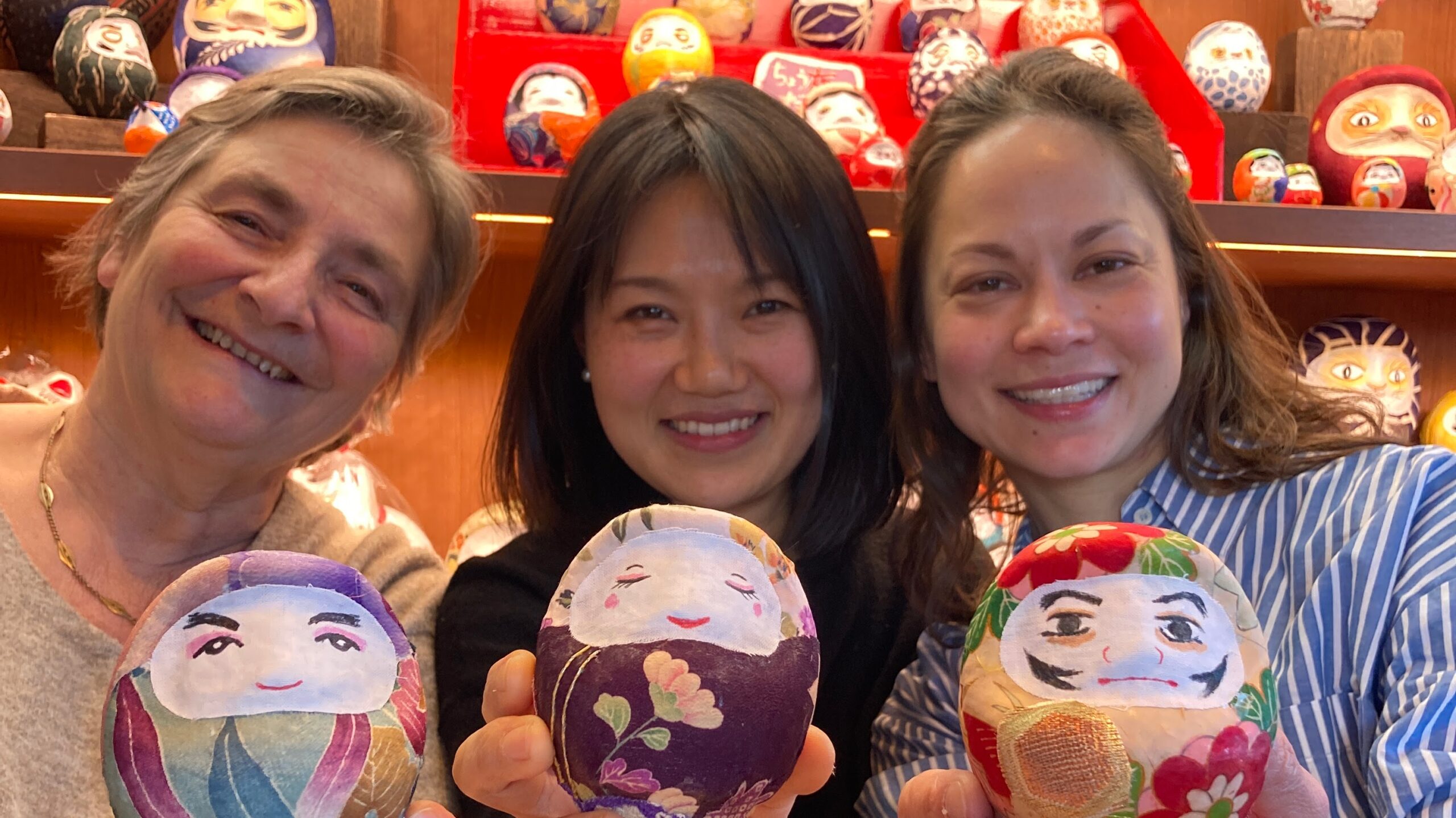
Near Jindaiji Temple in western Tokyo—an area historically connected to Daruma culture—there is a small workshop where visitors can create their own Daruma using traditional Japanese fabrics.
Instead of painting, participants work with carefully selected kimono, yukata, and kakishibu-dyed cloth, cutting and layering patterns to shape a personal Daruma. The process is slow, tactile, and surprisingly calming.
It is not about artistic skill.
It is about spending time with an intention—long enough to take it seriously.
The result is not just a souvenir, but a physical reminder of a moment when you chose to commit rather than merely wish.
You Don’t Need to Believe — Just Show Up
This is not a religious ritual, and it does not require belief in luck or superstition.
You do not need to be “creative.”
You do not need to know Japanese culture in advance.
All that is required is the willingness to pause, focus, and make something with care.
Sometimes, that is enough to change how we think about our goals.
Learn More
If you’re curious to experience this Japanese approach to turning intention into action,
you can learn more about the Daruma workshop here: