
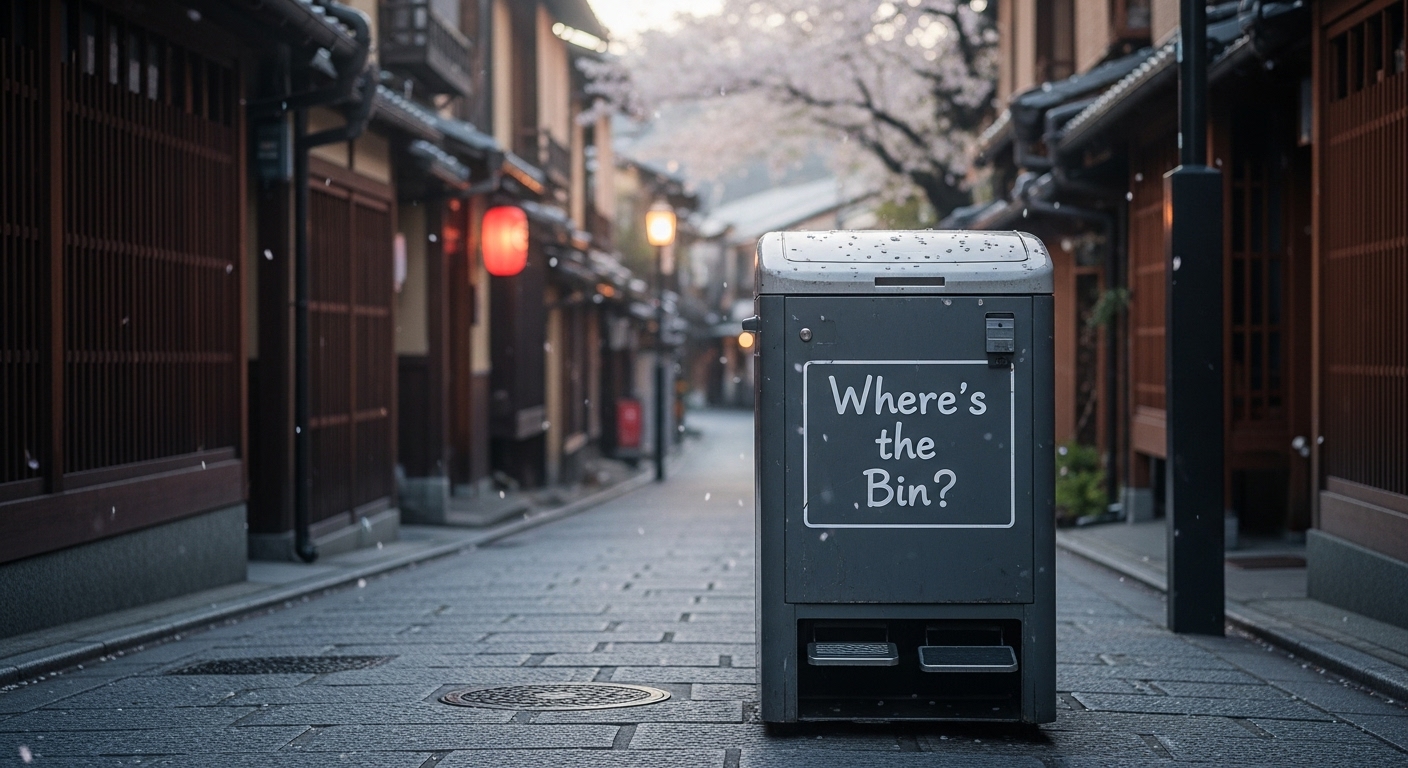
Why trash cans are rare—and how to handle waste without being that tourist
If you’ve wandered Tokyo or Kyoto with an empty cup and nowhere to toss it, you’re not alone. In a recent survey of departing visitors, 21.9% said the lack of trash bins was the biggest inconvenience of their trip. トラベルボイス+1
Why there are so few bins
After the 1995 Tokyo subway sarin attack, many public bins—especially in stations—were removed or reduced for security. Clear, see-through bins remain in some areas, but numbers are limited and placement is cautious. Over time, “carry your trash home” became the norm. Pacific Standard+1
Where you can throw things away (and how)
- Convenience stores (konbini): Small sorting bins are usually inside or near the entrance, primarily for customers—buy something first and use the labeled slots (burnables / cans & bottles / PET).
- Train stations: Look near vending machines or ticket gates; some lines have transparent bins, others keep numbers low. Be ready to walk a bit.
- Parks & facilities: Larger parks, food courts, and museums often have sorting stations—follow the icons.
- Your hotel: Front desks often help with small items you’ve carried back.
Pro tip: Keep a flat zip bag in your daypack as a tiny “trash kit.” It seals odors and buys time until you find proper sorting.
Kyoto (Gion) etiquette—don’t do this
Kyoto’s Gion district has faced overtourism and litter in narrow private lanes. From 2024, parts of these private alleys restrict entry with multilingual signs and fines to protect residents and geiko/maiko. Don’t eat while walking in tight heritage streets, and never stash rubbish in planters, drains, or rivers.
Sorting 101 (simple)
- Burnable (paper, wrappers, tissues)
- Cans / Bottles (metal & glass)
- PET bottles (often separate)
Finish liquids before using bins—no pouring into trash.
Quick scenarios
- Street snack done in Asakusa? Keep the wrapper; drop it at a konbini after a small purchase.
- Empty bottle on a JR platform? Check near vending machines or gates; if none, carry it to the next station/hotel.
- Park picnic? Sort at on-site stations if available; otherwise bring it back.
Why it matters
Japan’s cleanliness relies on shared habits. Working with the “carry-it-home” culture keeps neighborhoods welcoming—for you and the next visitor.
Like learning the “why” behind local etiquette?
Try a small, creator-led experience that helps you see a more authentic Japan—without the tourist cringe.
→ https://crazyescape.net/experiences/