
Japan feels cashless—until the exact minute it isn’t. Street stalls, tiny counters, shrine etiquette, coin-operated quirks… the map is modern, but the field is patchy. This guide highlights the specific moments when a few bills and coins save your day, plus quick fixes and polite phrases to keep things smooth.
Minimal carry: three ¥1,000 bills + six ¥100 coins. You’ll use them more than you think. JNTO also reminds travelers that many places still require cash.
1) Shrines & Temples: Offerings, Omikuji, Goshuin
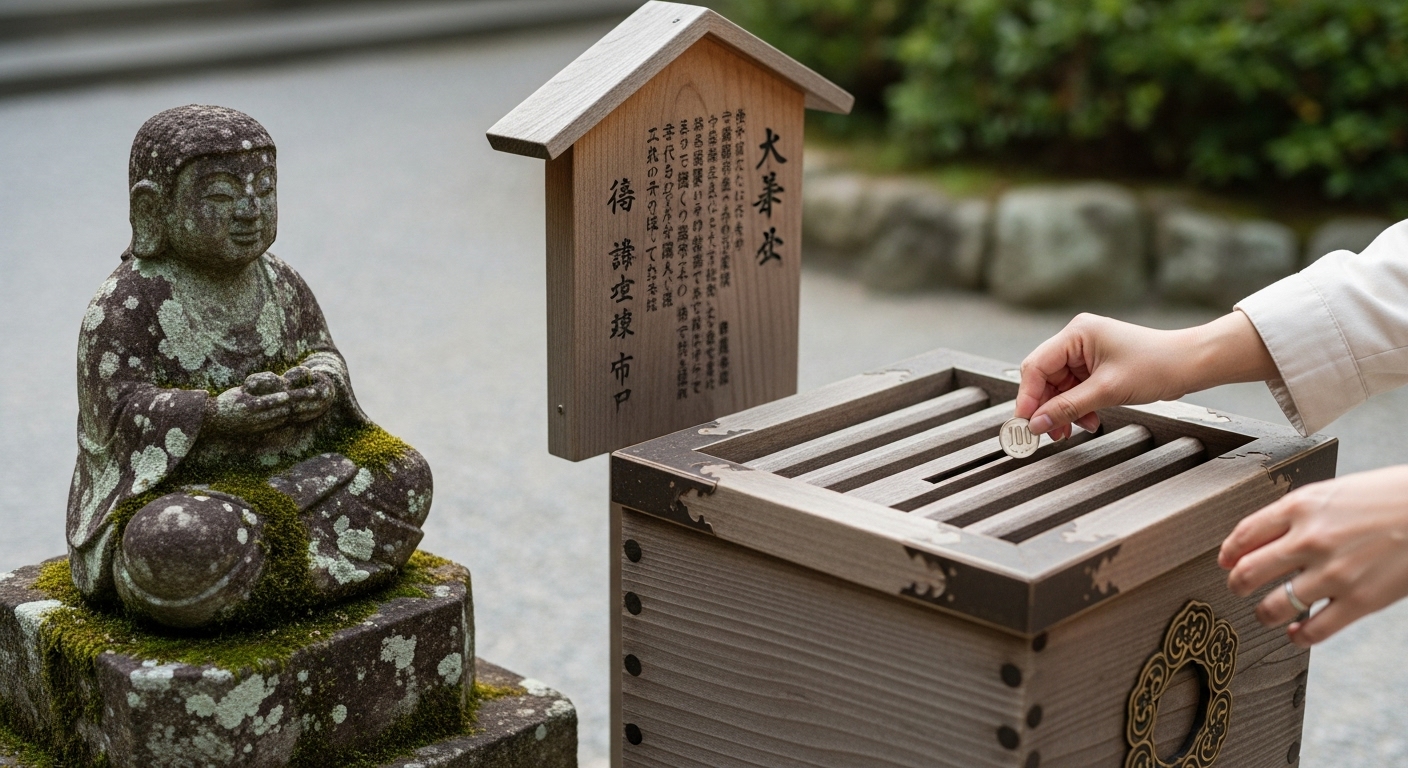
Coin offerings and small fees are usually cash. Omikuji fortune slips can be as little as ¥100 (example: Meiji Jingu), and goshuin stamp donations are commonly around ¥300 (varies by site).
Quick fix: Keep a coin pouch.
Phrase: “Do you have change?”
2) Neighborhood Festivals, Street Stalls, Local Markets
Pop-ups and mom-and-pop vendors often lean cash-preferred / cash-only. Don’t assume QR or cards. JNTO: “many places still require cash.”
Quick fix: Small bills in a separate pocket for faster hand-offs.
3) Capsule Toys (Gashapon)
Machines are coin-operated; premium units require ¥500 coins (combinations vary by machine).
Quick fix: One ¥500 and a few ¥100 coins if you’re hunting a series.
4) Hitting Zero on Your IC Card (Suica/PASMO)
You can recharge with cash at station machines and convenience stores, and Seven Bank ATMs let you top up e-money with cash only (including Mobile Suica).
Phrase: “Can I add cash to my IC card here?”
5) Local Buses (and Some Taxis)
Payment varies by city/operator; many buses take IC cards, but procedures differ—be ready for exact-fare cash, especially outside big hubs.
Quick fix: ¥1,000 bills + small coins cover flat and distance-based fares.
6) Tiny, Owner-Run Shops
Standing bars, 8-seat eateries, used-book stores: signage may say “Cash Only.” JNTO notes Japan remains cash-centric in smaller places.
Phrase: (show your card, gentle tilt) “Cash only?” works universally.
7) Coin Lockers
Most big-station lockers now accept IC cards, but plenty of older units still want ¥100 coins—and that’s often the only way when the IC reader is full/busy.
Quick fix: If you’re short on coins, buy a small item at a convenience store to break a bill.
8) Public Payphones (Emergencies)
They still exist (and help when your phone dies). 10-yen / 100-yen coins and/or phone cards are used; no change is given from a 100-yen coin.
Quick fix: Stash five 10-yen coins in your wallet.
9) Machines with “Quirks”: Vending & Parking
Japan rolled out new banknotes; many vending/parking machines needed upgrades—so compatibility and payment types can vary. Have small bills/coins as a fallback.
10) “The Miscellaneous” at Lodgings & Laundromats
Key deposits, small add-ons, or older coin-operated washers/dryers can still pop up—petty cash keeps your night moving.
Quick fix: Keep one ¥500 and at least six ¥100 coins handy.
Your “Cash Kit” (Save this)
- Bills: three–five ¥1,000 notes
- Coins: ¥100 × 6, ¥10 × 5, plus one ¥500
- IC card buffer: load ~¥3,000 (top up with cash at stations/konbini/Seven Bank ATM).
- International ATM fallback: Japan Post Bank and Seven Bank ATMs work with many foreign cards (English UI).
30-Second Recap
- Japan is “cash-leaning cashless.”
- The coin gap causes most snags.
- Carry a light cash kit and you’ll breeze through the edge cases.
Ready to put your smoother day to work somewhere local?
Discover experiences on Crazy Escape. Find a route that matches your pace—no pressure, just deeper Tokyo.