
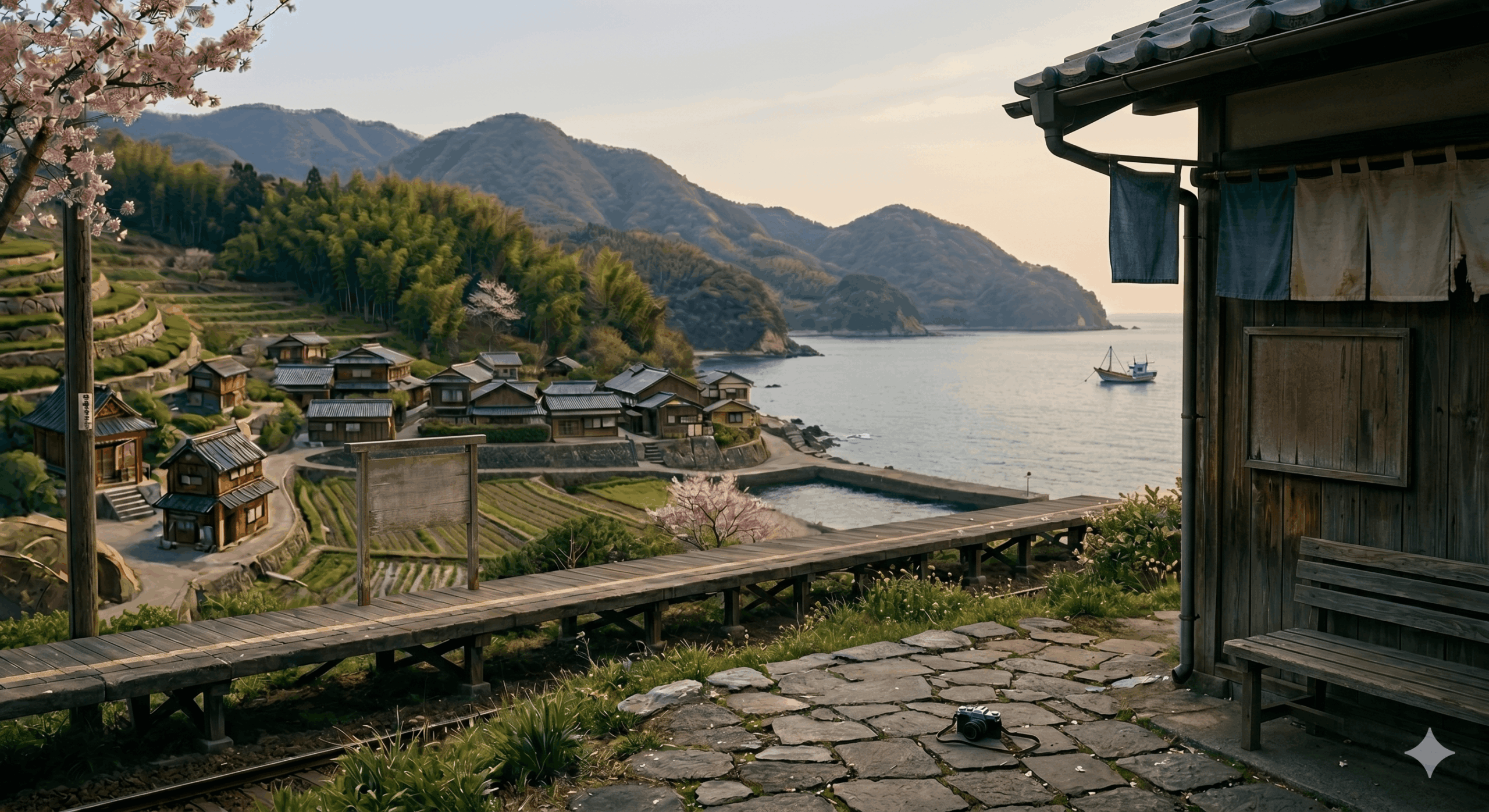
By the third day of any well-planned Japan trip, a particular fatigue sets in — not exhaustion, but sensory satiation. Shibuya has been crossed. The arcades have done their work. For the traveler on a second or third visit, a different appetite surfaces: not for more stimulation, but for its absence.
This shows up in how seasoned travelers now plan — asking not “what’s the best thing to see” but “where is there nothing to see.” The sought-after experience isn’t a denser schedule. It’s deliberately empty time.
That means stepping off the Shinkansen onto a two-car regional line that runs six times a day, arriving at an unstaffed wooden platform with no gates, no convenience store — just bamboo in the wind and water moving somewhere unseen. The destination is often an onsen town run by the same family for a century, drawing from the same mineral spring, serving meals built from whatever the mountains produced that morning.
This isn’t rural nostalgia. These towns aren’t performing simplicity for visitors — they’re simply continuing at the pace they always have, indifferent to whether anyone notices. In a travel economy built around the photographable moment, a place that asks nothing of you becomes its own luxury.
None of this requires abandoning the neon. Tokyo’s density and the countryside’s silence are two registers of the same culture. The crossing fades into a blur of other crossings. The unstaffed platform, the steam, the quiet meal — that tends to stay.
[Beyond the Filter] Crazy Escape designs the quiet half of the itinerary. ➔ Explore Curated Journeys on Crazy Escape Insights