
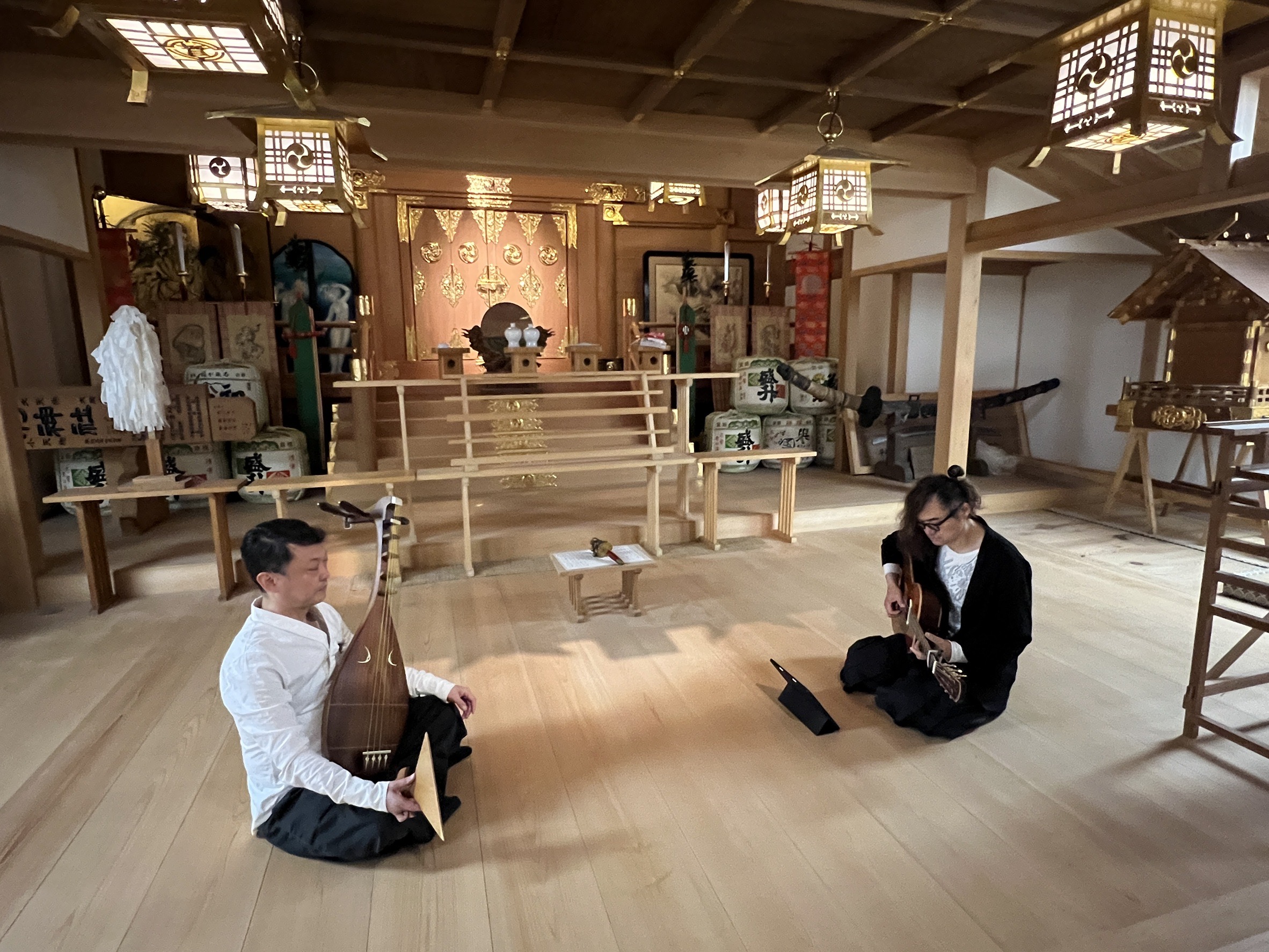
In a lot of places, music starts with skill.
Notes. Timing. Technique.
Then—if you’re lucky—something emotional happens.
Japan has a different entry point.
Sometimes, the art begins before the first sound.
With posture. With restraint. With the way you hold yourself in front of an object that deserves care.
That’s why the Satsuma Biwa doesn’t feel like “an instrument you play.”
It feels like a relationship you enter.
A sound built for stories, not stages
The biwa is a short-necked Japanese lute tied to narrative traditions—stories carried by voice and string rather than spectacle.
Satsuma Biwa in particular is known for a powerful, dramatic approach—large plectrum, bold strikes, and a sound that can evoke intensity rather than prettiness.
But the part most visitors don’t expect isn’t the volume.
It’s the discipline.
The experience: etiquette first, sound second
Crazy Escape’s SAMURAI SOUND – Satsuma Biwa Experience is built around an idea that feels very Japanese:
How you approach the instrument is part of the music.
Before you play, you learn the traditional manners that accompany interacting with the Satsuma Biwa—posture, movement, and small gestures that naturally place you into a different mindset.
It’s not a lecture.
It’s a recalibration.
Then you hold the instrument, feel its weight, and create sound with your own hands—this is not just something you watch.
And yes: you may even sing along while playing, experiencing the music in a way that echoes how it was once shared.
Why this feels “samurai” without turning into cosplay
The page calls it “samurai Japan,” but the point isn’t costume or performance.
It’s the mindset: presence, care, and the seriousness of small actions.
Japan often puts meaning into how something is done:
- how you sit
- how you enter a room
- how you hold an object
- how you make space for others
Biwa makes that visible—because the sound changes when your body changes.
You don’t just “play a note.”
You learn to arrive.
What happens in 70 minutes
The experience is structured (and the structure matters):
- Intro + etiquette guidance (posture, movement, cultural mindset)
- Hands-on biwa time (touch, hold, create sound)
- Short break
- Play while vocalizing, then end with a quiet epilogue
- It concludes with a solo performance video recording, sent to you later by email
That last detail is underrated: you leave with a trace of the moment that isn’t a photo of you “doing Japan,” but a record of you inhabiting a different pace.
Why this fits a Tokyo trip (even though it isn’t in Tokyo)
The location is Yamato City, Kanagawa—a short venture outward that tends to reset your internal tempo simply because you’re no longer in the center of constant decisions.
Even the directions read like the experience’s philosophy: a quiet neighborhood walk to the venue, arriving without rush.
This is not an attraction.
It’s a subtle shift in how you move through Japan.
If you’re the right kind of traveler, this lands hard
This experience is for you if you:
- want Japan outside the usual tourist template
- care about craft, discipline, and presence more than “highlights”
- like experiences where your body learns something your brain can’t Google
If you’re looking for spectacle, this won’t be that.
If you’re looking for a moment that makes you think, I didn’t expect Japan to be like this, it often is.
Booking
If you want to feel Japanese etiquette become sound in your own hands, you can book SAMURAI SOUND – Satsuma Biwa Experience via Crazy Escape.
- Location: Yamato City, Kanagawa (Sakuramori Kaikan)
- Time: starts at 10:00 (sample schedule shown)
- Duration: 70 minutes
- Group size: 1–10
- Fee: 250 USD / person
- Cancellation: free if canceled more than 48 hours before; within 48 hours is 100% fee