
Wake up in Osaka with money and time left.
Tokyo ⇄ Osaka/Kyoto is where night buses shine. You ride while you sleep, arrive at dawn, and keep your entire day free. It’s not a tour we sell—just a local hack many residents use to save money and time. Japan Travel
Quick compare (Tokyo → Osaka)
- Night bus: ~8–10 hrs overnight; fares commonly ¥7,000–¥10,000 on standard seats (premium seats cost more). You wake up ready to go. 高速バス+1
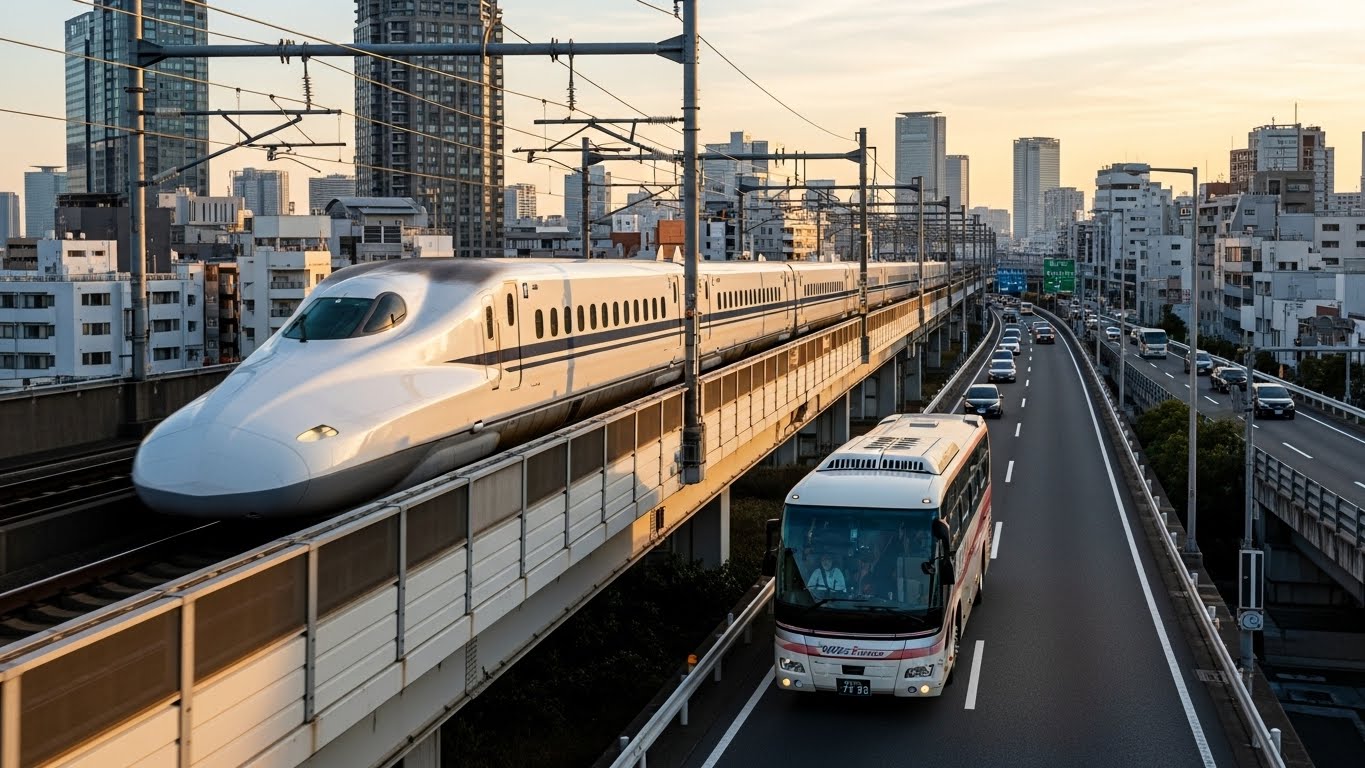
- Shinkansen (Nozomi, reserved): about ¥14,000 one way; ~2 h 30 m in daylight—fast, but those hours come out of your touring time. (Official JR Central fare table, Apr 1, 2025.) JR東海
Bonus: an overnight ride can also offset one night of accommodation, which is why budget travelers call it a two-in-one (transport + “hotel”). Japan Travel
Pack this “quiet & comfy” kit (30 minutes, tops)
• Eye mask & foam earplugs
• Inflatable neck pillow
• Light layers you can add/remove
• Power bank (even if the bus has outlets)
• Face/hand wipes, toothbrush sheets
• Small water + light snack
• Zip bag for trash (carry-out culture)
Choose the right bus & seat (the real hack)
- 3-row independent layout (1–1–1) = no shoulder contact; often with privacy curtain. Many services list power/USB, on-board toilet, Wi-Fi—filter for these when you book. WILLER TRAVEL+2VIPライナー+2
- Premium sleepers/cabins exist (e.g., “private room-style” buses on Tokyo–Osaka). Pricey, but extremely restful. kanto-bus.co.jp
- Seat placement: pick mid/front for less sway; avoid the last row.
- Arrival time: aim for 06:30–07:30 → shower, locker, breakfast, then start sightseeing fresh.
Where to compare quickly: government-approved Japan Bus Lines, plus marketplaces like WILLER or Kosokubus to see seat types, amenities, and dates side-by-side. ジャパンバスラインズ+2WILLER TRAVEL+2
Onboard quiet routine
- Set phone to night mode & dim screen.
- Layer up (neck and core warm = easier sleep).
- Small sips of water; avoid big drinks before lights-out.
- No phone while moving—we stop for photo breaks.
- Wake 30 min before arrival for a calm reset.
Morning playbook (arrive and go)
- Sento/sauna near the terminal for a shower & reset, then
- Coin locker drop, and
- Bakery breakfast before crowds.
You’ll still be starting around 9:00, which is the night-bus advantage in one line.
Risks & workarounds
- Motion/neck fatigue → 3-row seat + neck pillow, choose mid-bus.
- Cold/warm swings → removable layers; some buses don’t give blankets.
- Luggage rules vary → check the listing; some services restrict trunk size and cabin bags. 高速バス
5-step booking to wheels-up (save/print)
(2–3 days out) Pick: 3-row + curtain + outlet + toilet; ETA ~7am
(Prev. day, 30 min) Pack the kit above
(Depart) Arrive 15–20 min early; quick seat check; light hydration
(Onboard) Night mode on, settle, sleep
(Arrival) Shower → locker → breakfast → 9:00 start
Notes & reality check
Fares swing by date, seat type, and operator; use filters and calendars to spot low prices (you’ll regularly find sub-¥10k options; premium seats cost more). Ride time is route/traffic-dependent; always check the exact listing. WILLER TRAVEL+1
If this kind of smart, low-stress travel hacks your day in a good way, peek at our small, crowd-savvy local experiences next time you’re in town:
→ https://crazyescape.net/experiences/
Sources for key facts
Night buses combine travel + accommodation and save time/cost (JNTO). Japan Travel
Tokyo–Osaka night-bus duration & marketplace overview (Kosokubus). 高速バス
Seat filters/amenities & fare examples by date (WILLER). WILLER TRAVEL
Some operators provide privacy curtains; many list outlets/Wi-Fi/toilets (VIP Liner / Japan Bus Tickets). VIPライナー+1
Official Nozomi fare table (JR Central, Apr 1, 2025). JR東海