
How to spot it, read it, and appreciate it—without touching
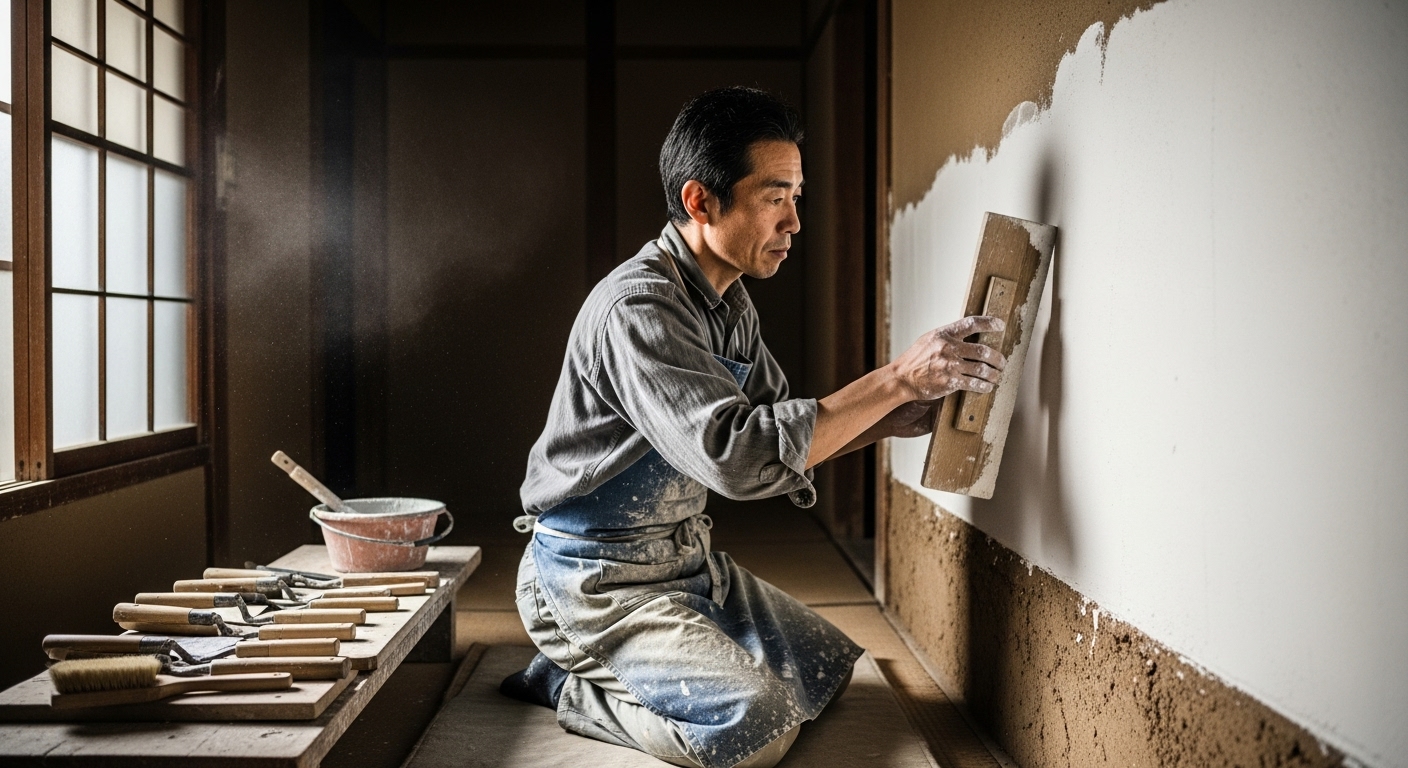
You’ll see them everywhere once you know what to look for: velvety, hand-troweled walls in townhouses, tea rooms, and design-forward cafés. They’re made by sakan—Japanese plaster artisans—using natural materials like lime (shikkui) and clay (tsuchikabe). Here’s a quick field guide to noticing what most visitors miss.
What is sakan—and why is it special?
- Sakan are traditional plasterers who finish walls by hand with a steel trowel (kote).
- Materials are typically shikkui (lime plaster), clay/earth mixes, or diatomaceous earth—breathable, low-odor, and repairable.
- The surface isn’t “perfect” like paint or drywall; it shows subtle trowel marks and light play—a quiet, wabi-sabi kind of beauty.
How to see a sakan wall (without touching)
- Raking light test: Step sideways and let low-angle light skim the wall—you’ll catch the kote-aji (trowel texture).
- Corners & edges: Many sakan finishes soften corners (rounded returns) instead of sharp drywall lines.
- Sheen: Some lime plasters are lightly polished; they reflect a soft glow rather than a hard shine.
- Color depth: Earth plasters carry tiny mineral tones; whites in shikkui feel warm, not clinical.
- Patches: Small hand repairs can stay visible—embraced as patina, not defects.
Etiquette: admire without touching—skin oils stain natural plasters.
Where to find it (likely candidates)
- Machiya townhouses, kura storehouses (look for white plaster joints and textured surfaces)
- Tea rooms and ryokan interiors
- Sake breweries and old merchant houses (regional museums too)
- Modern cafés, galleries, and design hotels that favor natural finishes
(Signs rarely say “This is sakan.” Use the checklist above to spot it.)
Why Japan still loves plaster
- Breathability & comfort: Earth and lime help buffer humidity and odors.
- Repairable & long-lived: Craftspeople can patch and refinish instead of ripping out.
- Low-VOC, natural feel: A tactile calm you can’t fake with vinyl or paint.
If you meet a craftsperson or staff
Two respectful questions that open doors (and conversations):
Show this (Japanese) — Point & Show mini card
この壁は左官仕上げですか?
Kono kabe wa sakan shiage desu ka?
(Is this a sakan/plaster finish?)

この仕上げを作った職人さんはどなたですか?
Kono shiage o tsukutta shokunin-san wa donata desu ka?
(Who made this finish?)
Pocket glossary (save this)
- Sakan — traditional plaster artisan
- Shikkui — lime plaster
- Tsuchikabe — earth/clay wall
- Kote — trowel
- Kote-aji — trowel texture/character
- Wabi-sabi — beauty in imperfection and time
Sakan finishes are handmade, breathable, and quietly expressive. Catch the trowel marks in raking light, note the soft corners, and enjoy the way natural materials age. You’ll start seeing them everywhere—and appreciating the craft behind Japan’s calm interiors.
Like going beyond the guidebook—into maker culture and calm spaces?
Explore small, local experiences designed for low-stress, off-peak days.
→ https://crazyescape.net/experiences/