
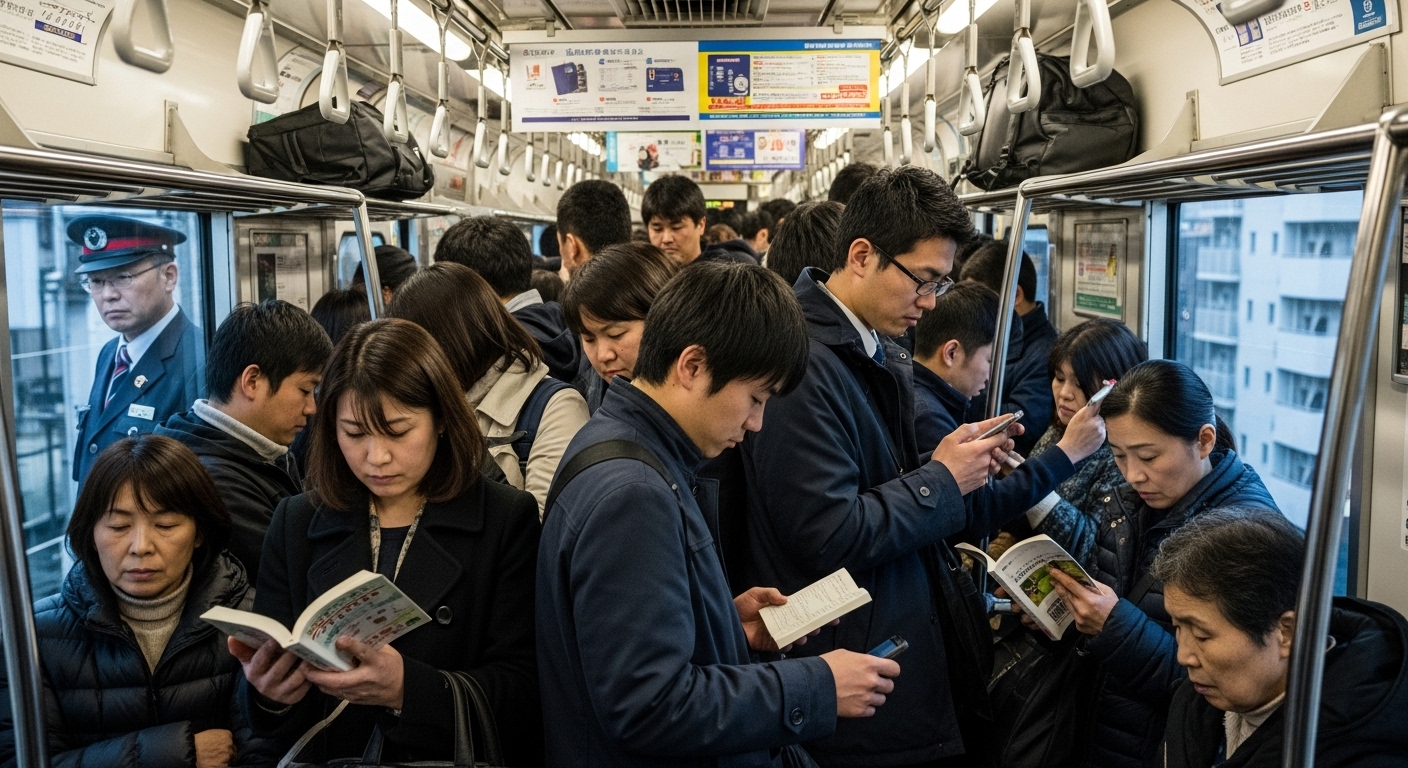
Japan’s trains move millions with clockwork calm. That calm isn’t an accident—it’s manners in motion. Master a few small habits and you’ll glide through rush hour like a local (and maybe even enjoy the ride).
Why Politeness Matters on Japan’s Rails
Railways here are a shared rhythm: fast, frequent, and famously on time. Courtesy is the lubricant. Where you stand, how you wear your bag, and when you speak—these micro-choices keep the whole system flowing.
Boarding Smart: The 10-Second Rule
- Line up at the floor markers. Wait beside the doors, not blocking them.
- Let riders off first. Give it a beat—about 10 seconds—before stepping in.
- Step in, step over. Move toward the middle; don’t camp by the door.
- Micro-shuffle. Tiny steps create real space; mirror the local pace.
Quiet Inside: Phones, Audio, and Food
- No voice calls. Text instead. If urgent, step to the vestibule at car ends.
- Headphones only. Keep volume low enough that no sound leaks.
- Skip food on city lines. Long-distance trains are fine; metros at rush hour are not the place for snacks.
Bags, Bodies, and Personal Space
- Backpack to the front. Wear it on your chest or hold it down by your legs.
- Share the pole. One hand, low grip; don’t block others.
- Mind the door zone. When it’s packed, turn slightly sideways so doors can close cleanly.
Seats, Priority Areas, and Who Gets Them
- Priority seats are for people who need them: elderly, pregnant, injured, with infants, or with medical devices. Offer yours proactively—no drama, just a nod and “Dōzo.”
- If someone is struggling for balance, offer your seat even outside the priority area.
- Bags on laps, not seats. In rush hour, an empty seat is someone’s lifeline.
Platforms, Lines, and Escalators
- Follow the arrows. Platforms show where doors stop; queues form there.
- Escalators vary by region. In Tokyo, stand left, walk right. In Kansai it’s often reversed; follow signage and the person ahead.
- Mind the yellow tactile tiles. They’re for vision support—don’t block them.
Women-Only Cars & Rush-Hour Strategies
- Women-only cars run during peak hours on some lines (clearly labeled on platforms and car doors). Respect the signage.
- Beat the crush:
- Ride one or two cars from the ends; they’re often less crowded.
- Shift your commute by ±15 minutes and you may halve the crowd.
- For transfers, position yourself near the exit side (platform diagrams help).
Handy Phrases (That Actually Help)
- Sumimasen(すみません)— “Excuse me.” (to pass or get attention)
- Arigatō gozaimasu(ありがとうございます)— “Thank you.”
- Onegaishimasu(お願いします)— Polite “please.”
- Dōzo(どうぞ)— “Go ahead.” (when giving your seat or letting someone pass)
From Trains to Culture: Go Beyond the Commute
If you appreciate the calm design of behavior on Japan’s trains, you’ll love meeting the culture behind it:
- Find the same stillness and intention in Zen Tea & Calligraphy.
- Explore playful visual order in Inside Japanese Manga.
- Carry home a symbol of good luck with Paint Your Own Daruma.
- Taste everyday comfort at our Hands-On Onigiri Workshop.
- Meet modern self-expression in a Gyaru Makeover pop-up.
Book your spot with Crazy Escape—English-friendly, small-group experiences that turn good manners into great memories.
Quick FAQ
Can I talk on the phone on trains?
Generally no—calls are frowned upon. Text or step to the vestibule.
Is eating allowed?
On city subways: avoid it. On long-distance or airport lines: light meals are fine.
Which side of the escalator should I stand on?
In Tokyo, usually stand left, walk right. In Kansai it’s often reversed; follow signs and locals.
How do I know it’s a women-only car?
Look for pink/purple signage on platforms and car doors indicating the time windows.